|
Tarun Yenamandra |
|
|
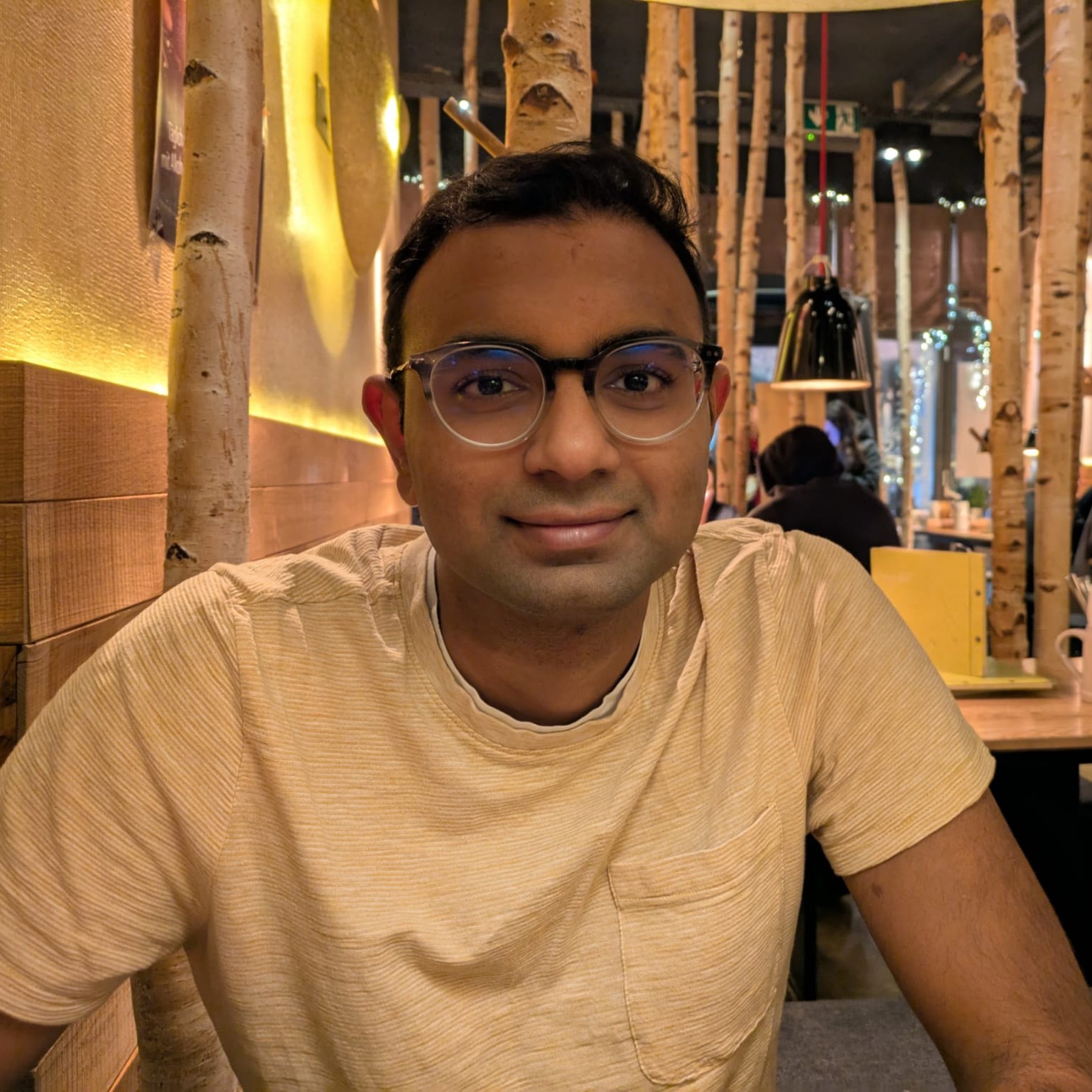
PhD candidate at TU Munich (advised by Prof. Daniel Cremers), specializing in the intersection of Generative AI and 3D/4D Computer Vision. My research bridges 3D geometry with conditional generation — from implicit morphable models and single-pass SDF rendering to learning-free sparse-view reconstruction. Previously Research Scientist Intern at Meta Reality Labs Research (diffusion-based scene editing, dynamic 3DGS). |
|
News
|
Selected PapersMy interests are at the intersection of generative AI and 3D/4D computer vision — specifically conditional generation with multi-view consistency, neural scene representations (NeRF, 3DGS), and sparse-view reconstruction. Full list on Google Scholar. |
|
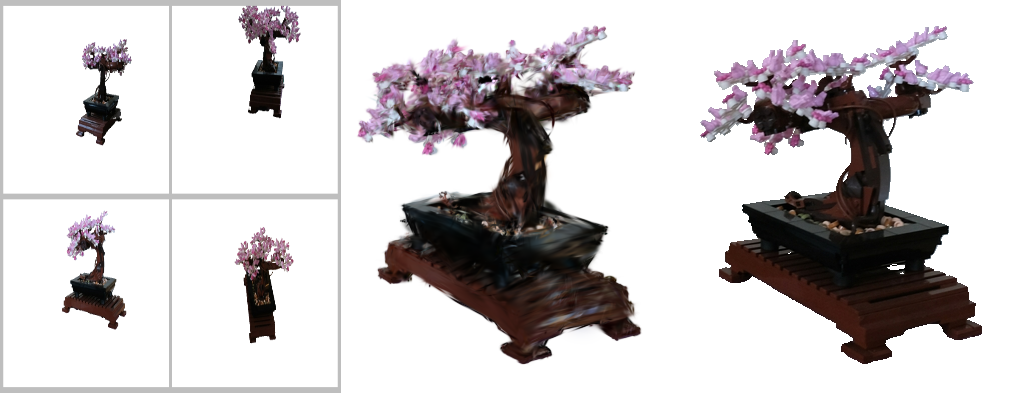
VisDom: Sparse Novel View Synthesis with Visible Domain Constraint
Mariia Gladkova*, Tarun Yenamandra*, Edmond Boyer, Robert Maier, Tony Tung, Daniel Cremers GCPR, 2026 (Oral) (*equal contribution) A learning-free, plug-and-play visible domain constraint for sparse novel view synthesis that eliminates geometric ambiguity from limited viewpoints. webpage / arXiv / code |
|
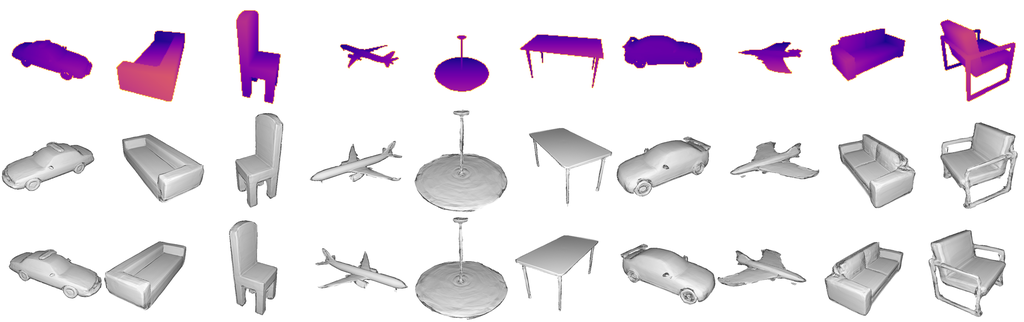
FIRe: Fast Inverse Rendering using Directional and Signed Distance Functions
Tarun Yenamandra, Ayush Tewari, Nan Yang, Florian Bernard, Christian Theobalt, Daniel Cremers WACV, 2024 Directional and signed-distance function based renderer that enables fast inverse rendering. webpage / arXiv / code |
|
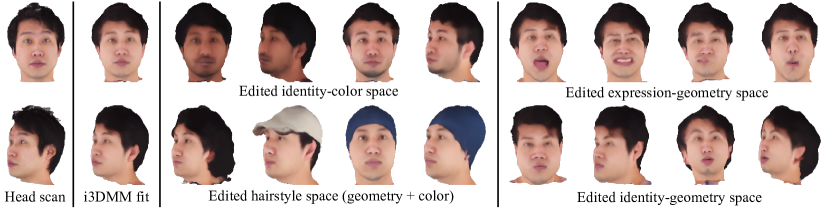
i3DMM: Deep Implicit 3D Morphable Model of Human Heads
Tarun Yenamandra, Ayush Tewari, Florian Bernard, Hans-Peter Seidel, Mohamed Elgharib, Daniel Cremers, Christian Theobalt CVPR, 2021 (Oral) Template-free implicit model for full human heads including hairstyle using signed distance fields. webpage / arXiv / code |
|
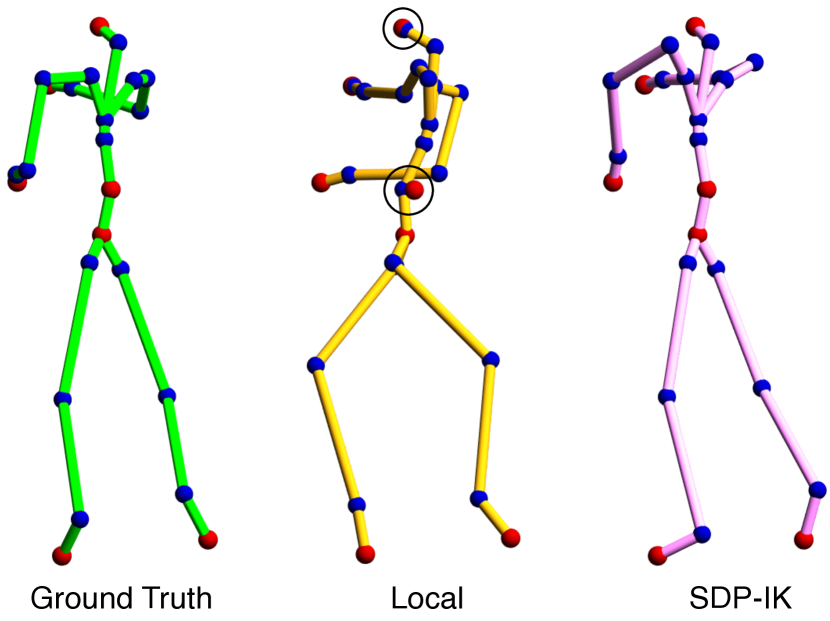
Convex Optimisation for Inverse Kinematics
Tarun Yenamandra, Florian Bernard, Jiayi Wang, Franziska Mueller, Christian Theobalt 3DV, 2019 (Oral) Modeling inverse kinematics as a semidefinite program to relax non-convex terms and remove initialization dependence. arXiv |